


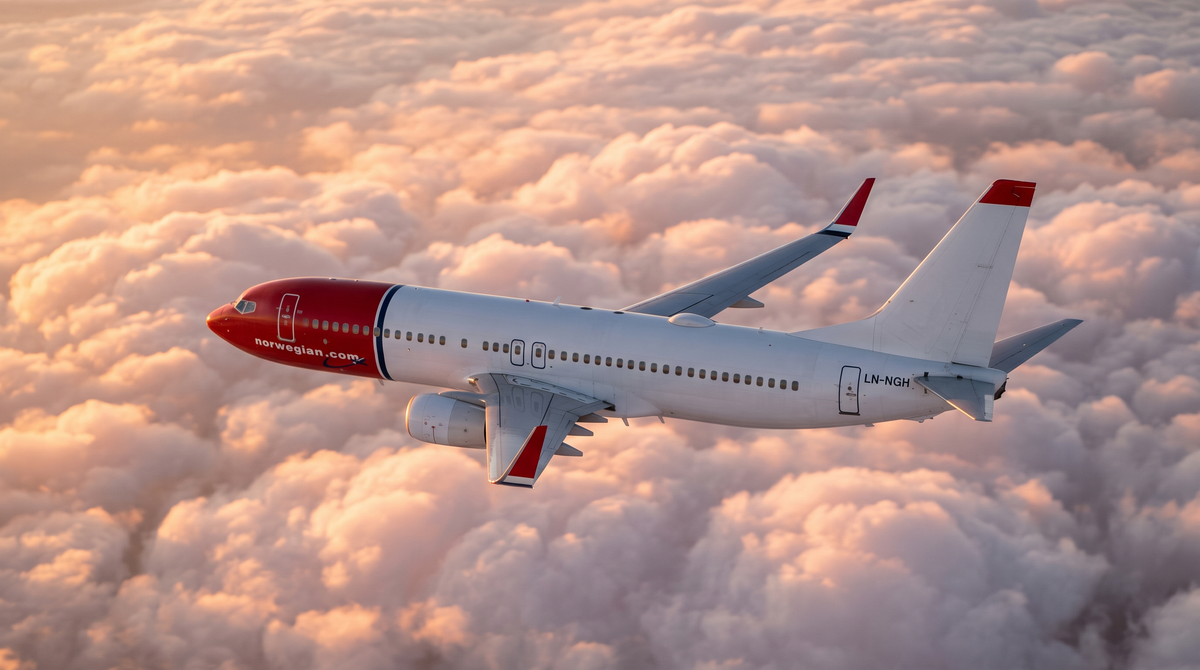
Norwegian Air Shuttle reported a second-quarter 2026 operating loss of NOK 603 million (about $61.9 million) on 14 July 2026, blaming a one-off EU emissions liability confirmed by Norway's Supreme Court and a sharp rise in jet fuel prices. It is a striking reversal for a carrier that posted operating profit (EBIT) of NOK 1,250 million (about $128.5 million) in the same quarter a year earlier.
The swing runs all the way down the income statement. Norwegian's net result fell from a profit of NOK 932 million (about $98.5 million) in the second quarter of 2025 to a net loss of NOK 555 million (about $57 million) this year. Total operating revenue, meanwhile, edged up by just 1% - meaning the damage came almost entirely from the cost side rather than from a collapse in demand.
Two items did most of it. Norwegian said the EU ETS obligation for 2020, together with negative foreign-exchange revaluation effects, produced a hit of NOK 733 million (about $75.3 million). The airline had argued that it should not have to settle the 2020 emissions charge because it was in reconstruction at the time; Norway's Supreme Court rejected that appeal in June, leaving the carrier to book the outstanding balance in a single quarter. Separately, fuel costs climbed 33% year on year.
"The results this quarter were impacted by the Supreme Court decision concerning the EU ETS obligation for 2020, the heightened fuel costs, and the timing of Easter," a Norwegian spokesperson said. The Easter reference matters more than it might appear: the holiday fell earlier in 2026, shifting a chunk of high-yield leisure traffic out of the April-June window and into the first quarter.
Operations held up better than the numbers suggest
Underneath the headline loss, the operating picture was steadier. Norwegian's capacity, measured in available seat kilometres, rose 5% in the quarter, while regional subsidiary Wideroe added 3%. The quarterly load factor came in at 82.5%, down 2.7 percentage points year on year - a decline the airline again linked partly to the earlier Easter.
Chief executive Geir Karlsen pointed to the cost programme as evidence that the underlying business is on track. "While the financial results were weaker than expected this quarter for several reasons, our cost focus initiatives are continuing to deliver, and cost excluding fuel is down 5 percent compared to last year. Norwegian was also ranked as the top European airline on punctuality in May," Karlsen said.
That distinction - cost excluding fuel down 5%, total costs up because of fuel and a legal bill - is the whole story of the quarter. Strip out the ETS charge and the fuel spike, and Norwegian's Q2 looks like an airline steadily grinding its unit costs lower while growing capacity at a measured pace.
What comes next
Norwegian struck a more optimistic tone on the outlook, saying it is "encouraged by the recent pick-up in the booking momentum". The carrier expects third-quarter production (ASK) to rise about 5% year on year, with full-year capacity growth of roughly 3% - a deliberately restrained ramp-up compared with the aggressive expansion that characterised the airline's pre-restructuring era.
The company also used its results statement to highlight an unusually cheap piece of marketing. Norwegian's World Cup wager with British Airways - which the Norwegian carrier lost, obliging it to swap its social-media profile logo for its rival's - generated what the airline described as significant brand exposure, including a 36% increase in social-media followers, 1.5 million likes and reactions, and more than 500 articles written about the bet.
For investors, the read-across is straightforward. The ETS charge is a one-off and now behind the airline. Fuel is not: at a 33% year-on-year increase, it remains the single biggest variable in whether Norwegian's improving unit-cost story translates into full-year profit. The next few quarters, with Easter effects out of the way and capacity growth in the low single digits, should give a much cleaner read on the underlying business.
Sources: AeroTime, FlightGlobal. Featured image: AI-generated by AviationShop. By Elena Vargas.















Comments
Loading comments…