


South Korea has formally opened the paperwork on its next fighter. The country's Defense Acquisition Program Administration, DAPA, issued a request for proposals on 21 August 2026 for a Conceptual Study of the Korean Next-Generation Fighter — the first concrete step toward a sixth-generation combat aircraft to follow the KF-21 Boramae.
The study itself is small and deliberately so. It runs for 14 months and carries a budget of 900 million won, roughly 650,000 US dollars. That figure buys thinking, not metal: the contractor is tasked with defining the aircraft's operational concept, its configuration design and the technology roadmap that would have to be in place before any development programme could realistically start.
What DAPA wants studied is already fairly specific. The request asks for two competing stealth fighter configurations, one of them a tailless design using alternative control surfaces in place of conventional vertical fins. It specifies broadband stealth spanning the L, S and X radar bands rather than the narrower X-band optimisation typical of fifth-generation designs. It calls for two adaptive-cycle engines capable of supersonic cruise, a single-seat cockpit and internal weapons bays.
Each of those requirements is a statement about what Seoul thinks the next air-combat environment looks like. Broadband stealth across lower-frequency bands is a response to long-wavelength surveillance radars that can detect X-band-optimised shapes at useful ranges. A tailless planform is the aerodynamic price paid to get there, since vertical tails are among the strongest radar returns on a modern fighter and removing them forces the designer into thrust vectoring or split-surface control schemes.
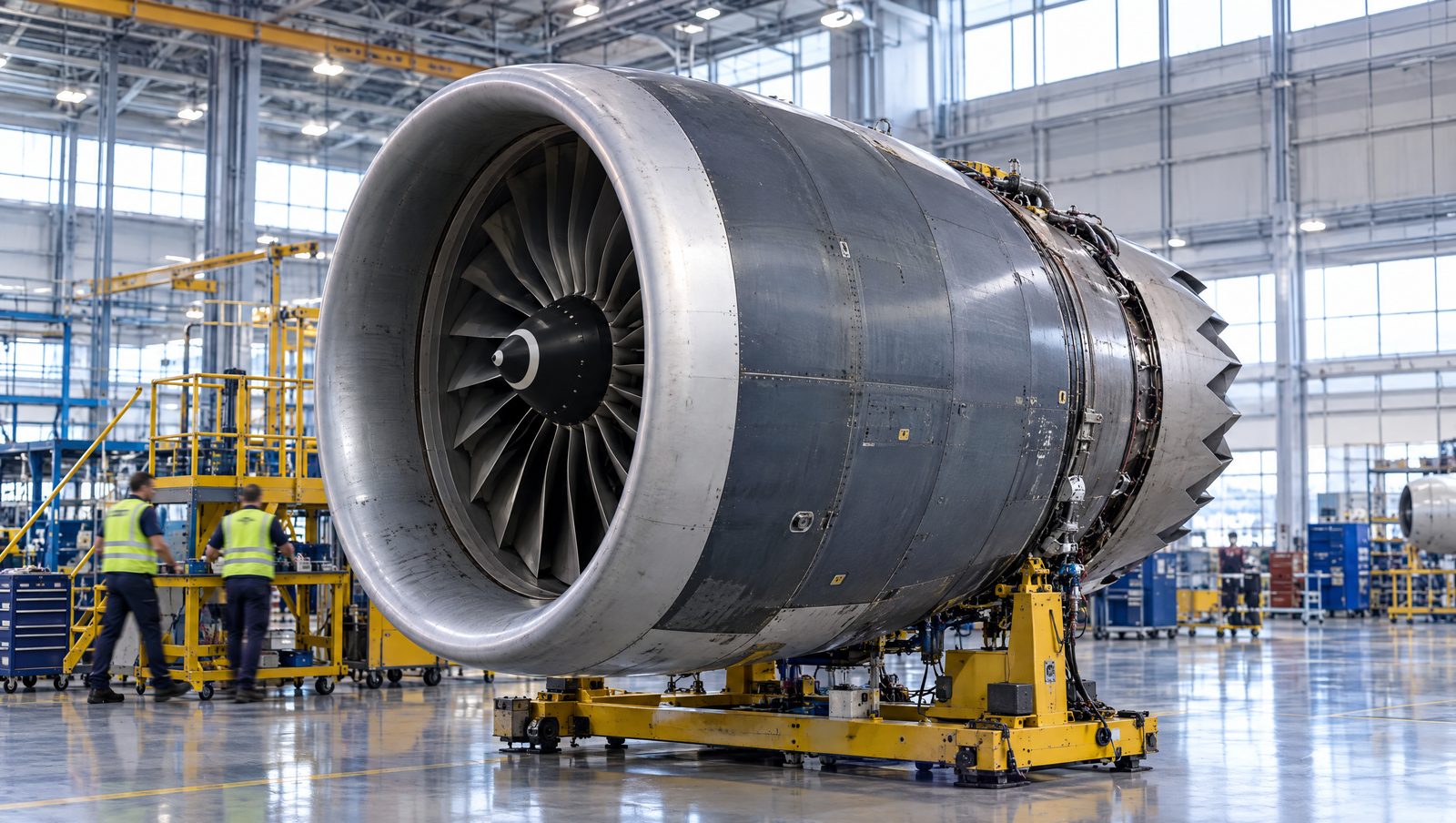
The adaptive-cycle engine requirement is the hardest item on the list, and Korean officials have not pretended otherwise. An adaptive-cycle powerplant changes its bypass ratio and combustion behaviour in flight, running efficiently in cruise and shifting to high thrust for supersonic dash. Only a small number of countries have working programmes in this area. South Korea's domestic propulsion effort, the state-led KTF-16000 intended initially for the KF-21, is targeting initial clearance for flight trials in 2041 — a date that gives a sense of how long the engine path is compared with the airframe path.
That timeline gap is the central tension in the programme. An airframe concept can mature far faster than a novel engine, and a sixth-generation design that cannot be powered domestically leaves Seoul with the same choice it faced before the KF-21: build indigenously and accept the schedule, or import and accept the dependency. A decision on when, or whether, to formally launch a development programme is expected before the end of the decade.
The context matters too. The KF-21 has moved from prototype to a maturing programme over the past several years, and the industrial base assembled around it — Korea Aerospace Industries, Hanwha and a wide supplier network — is the same base that would carry a follow-on aircraft. Concept studies of this kind are as much about keeping that engineering capability employed and current as they are about the specific aeroplane at the end.
For now the deliverable is a document, not a demonstrator. But the requirements written into it will shape what South Korea's air force flies in the 2040s.
Sources: The Aviationist, AeroTime. Featured image: AI-generated by AviationShop. By Daniel Okafor.






Comments
Loading comments…