


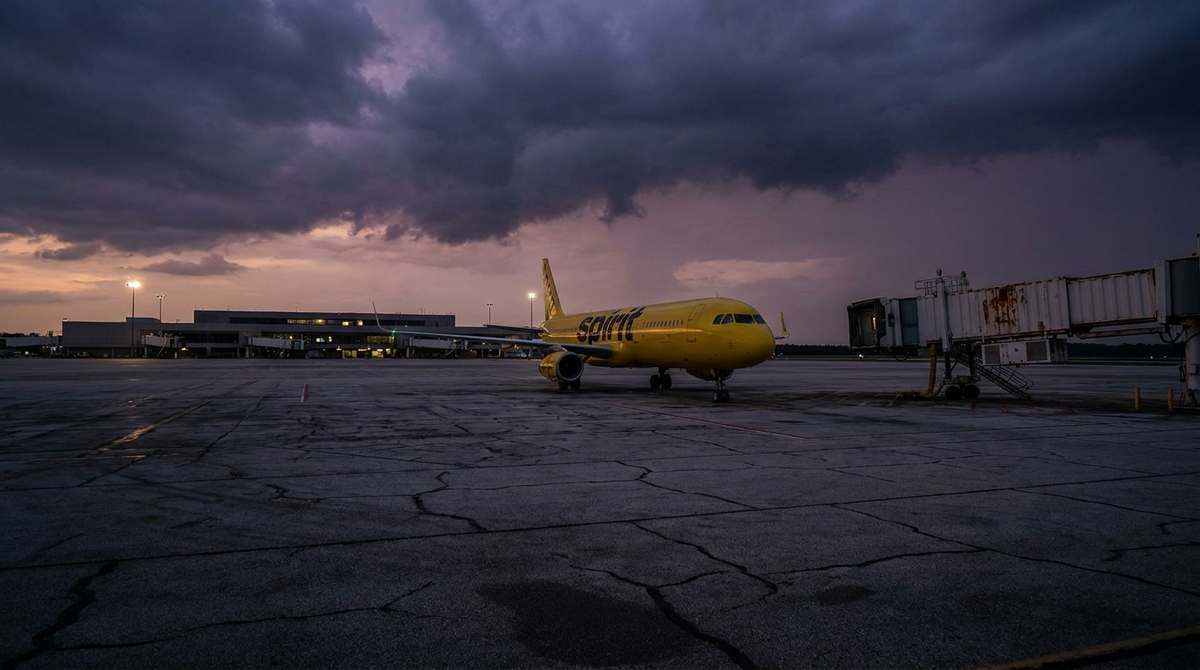

Spirit Airlines has officially ceased flying after 34 years in operation, marking the largest collapse of a US carrier in a generation. The ultra-low-cost airline began an orderly wind-down of operations in early May 2026, grounding every aircraft in its fleet and putting roughly 17,000 employees out of work as it begins court-supervised liquidation.
Headquartered in West Palm Beach, Florida, Spirit canceled all remaining flights and shut down its customer service operations. The carrier secured court approval to begin dismantling the airline and converting its assets into cash for creditors, with the wind-down budget set at approximately 217 million dollars.
How a Budget Giant Came Apart
The collapse followed months of mounting financial pressure that ultimately overwhelmed Spirit's restructuring efforts. According to industry reporting, jet fuel costs surged after geopolitical tensions in the Middle East drove crude prices sharply higher, adding roughly 100 million dollars in unexpected fuel expenses across March and April alone. That spike rapidly drained the airline's liquidity and made its earlier turnaround plan unworkable.
A last-ditch effort to secure a 500 million dollar government loan, which would have given federal authorities a stake of up to 90 percent in the carrier, fell apart in the final week of April. Without that backstop, Spirit's management board moved to halt operations rather than continue burning cash. The carrier's final flights touched down in the early hours of May 2, 2026, with one captain reportedly signing off air traffic control with the line "Godspeed, my friend."
Knock-On Effects Across the US Market
The shutdown leaves a significant hole in the US ultra-low-cost segment, where Spirit was long the largest single operator. United Airlines, Delta Air Lines, JetBlue Airways and Southwest Airlines have all introduced capped one-way fares of around 200 dollars for stranded Spirit passengers, easing immediate disruption while also competing for displaced customers.
Industry observers note that Spirit's exit removes a major source of price discipline from US domestic markets, and several legacy carriers are already redeploying capacity into former Spirit strongholds in Florida, Las Vegas and the Caribbean. Trade body Airlines for America acknowledged the disruption in a public statement and pointed to industrywide pressure from elevated fuel costs.
What Happens Next
Aircraft, gates, slots and ground equipment will now be auctioned off through the bankruptcy process, with rival carriers and lessors expected to compete aggressively for desirable assets. The dismantling is expected to play out over several months, and the disappearance of one of the most recognizable names in US low-cost flying marks a clear inflection point for the post-pandemic North American airline landscape.
Compiled from publicly available aviation news sources. Featured image: AI-generated by AviationShop. This article is original editorial content; facts have been verified across multiple public sources.
















Comments
Loading comments…