


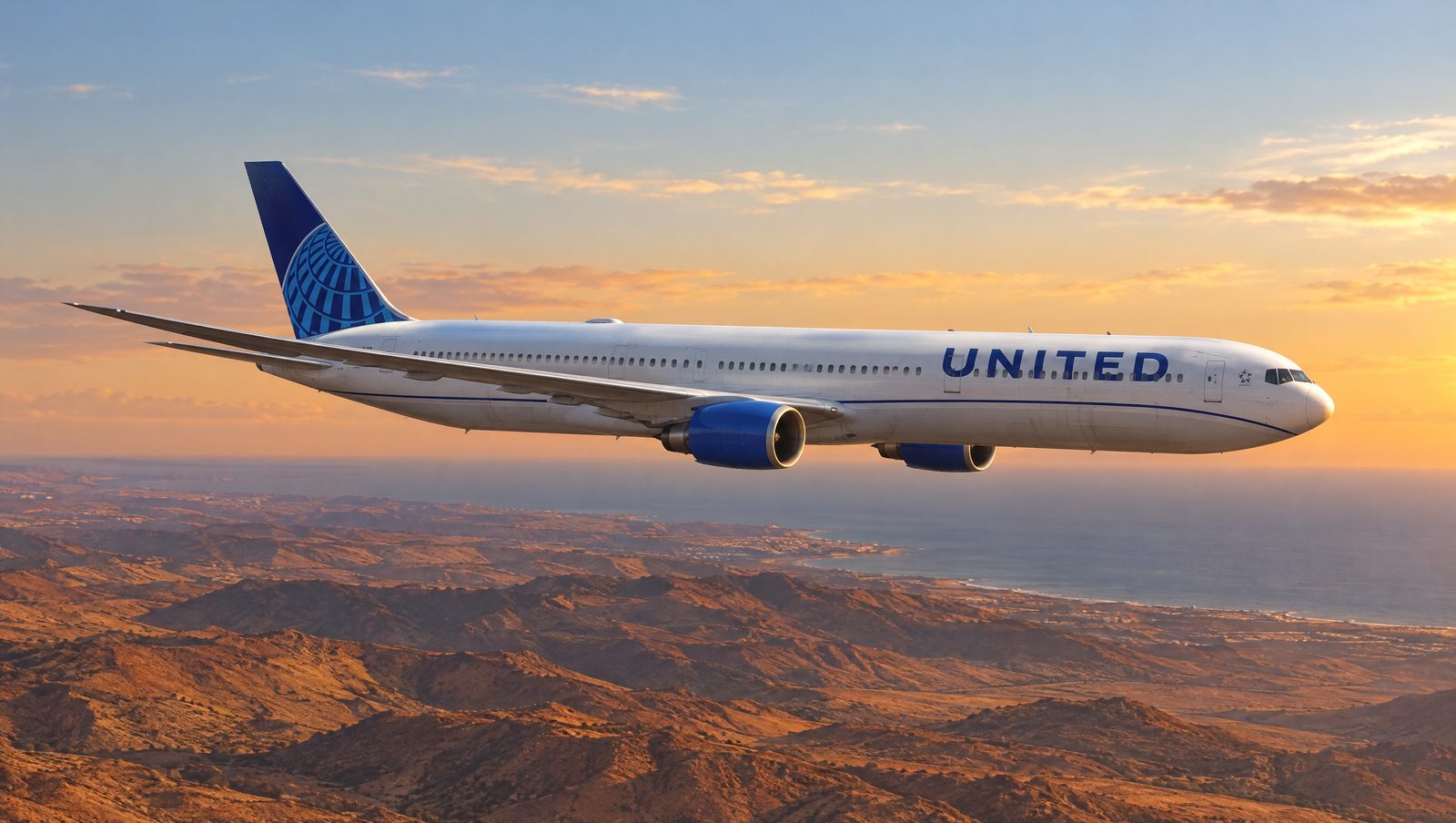
A United Airlines Boeing 757-200 bound for Newark diverted to Las Vegas on Thursday, August 27, after its crew reported a problem with one of the aircraft's engines. Flight 1403 had departed Los Angeles International Airport (LAX) for Newark Liberty International Airport (EWR) when the issue emerged in the cruise, prompting the crew to break off the transcontinental sector and set up for a landing at Harry Reid International Airport (LAS).
The aircraft landed safely in Las Vegas and taxied to the gate under its own power. There were no reports of injuries. Passengers then faced several hours of disruption on the ground while United arranged a replacement aircraft to complete the flight to Newark, turning a roughly five-hour transcon into a much longer day.
What the crew reported
Neither United nor the Federal Aviation Administration has publicly detailed the exact nature of the engine malfunction. The FAA has said it will look into the event, which is standard practice for an in-flight engine problem on a US-registered airliner, and any findings will ultimately shape whether the occurrence is logged as a routine precautionary shutdown or something requiring wider follow-up.
Diversions of this kind are, in operational terms, exactly what the system is designed to produce. A twin-engine transport aircraft is certified to fly and land on one engine, and crews are trained to treat any abnormal engine indication as a reason to get the aeroplane on the ground at a suitable airport rather than press on. On a LAX-EWR routing, Las Vegas is one of the first major diversion fields available after departure, with long runways, full emergency cover and a United presence for handling the aircraft and its passengers.
Why the 757 still matters to United
The Boeing 757-200 remains one of the most distinctive aircraft in the United fleet. Long, narrow and famously overpowered, it was built to lift heavy loads out of short and hot runways, and it went on to become the backbone of premium transcontinental flying in the United States. United uses the type on high-yield domestic routes and on a handful of thinner transatlantic sectors, where its range and narrowbody economics still make sense.
It is also an ageing aeroplane. Boeing ended 757 production in 2004, and no airframe in the type's fleet is younger than two decades. That reality has made engine and systems reliability a recurring theme for the operators that still fly it, and it is a large part of why United has been steadily introducing the Airbus A321XLR as a long-term replacement for the 757's premium transcontinental and thin long-haul missions.
Passenger disruption
For those on board Flight 1403, the practical consequence was a long wait in Las Vegas rather than any danger in the air. Sourcing a spare narrowbody at an airport that is not a maintenance base is rarely quick, and the crew operating the original flight will also have been working against duty-time limits.
The event is a reminder that an unscheduled landing is not the same thing as an emergency in the dramatic sense. In the overwhelming majority of cases, including this one, the aircraft lands normally, everyone walks off, and the airline's problem becomes a logistical one rather than a safety one.
Sources: Simple Flying. Featured image: AI-generated by AviationShop. By James Holloway.







Comments
Loading comments…