


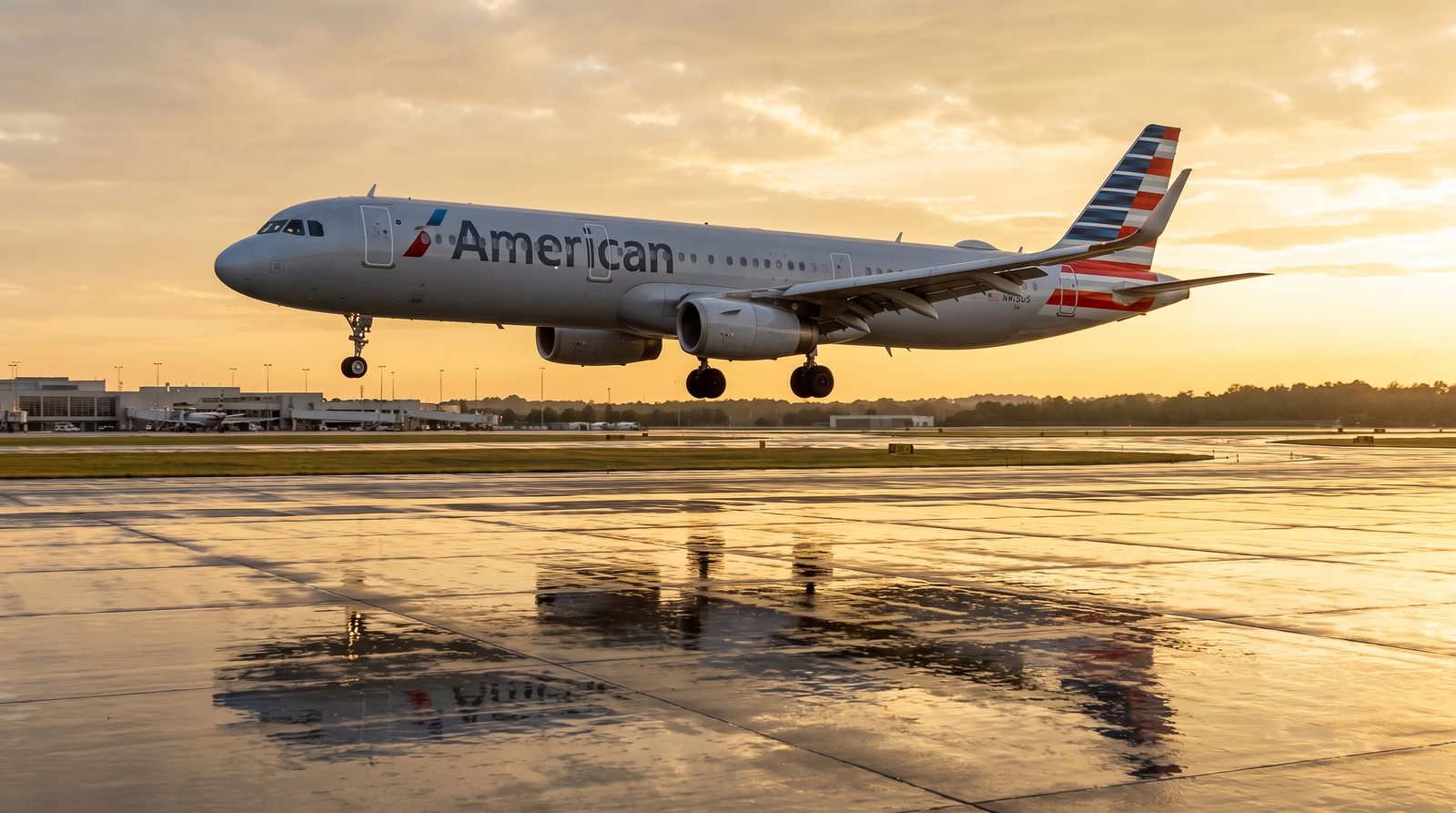
American Airlines is preparing to pilot a more realistic way of communicating delays at Charlotte Douglas International Airport, tying estimated boarding times to when the inbound aircraft is actually due to arrive rather than to the original timetable alone.
Aviation industry sources say the Fort Worth-based carrier plans to test the approach at Charlotte, its second-largest hub, before any wider rollout. Under the trial concept, the airline would derive boarding estimates from the arrival of the inbound jet so that status boards and customer messages track the aircraft that will actually operate the flight.
For years, frequent flyers have complained that American’s delay updates still measure slippage against the scheduled departure time. That practice can leave a large gap between what appears on the screen and when the flight finally boards, especially during “rolling delays,” when the departure time is nudged back in small increments instead of being replaced with one honest estimate.
Those rolling updates force passengers to linger near the gate without knowing whether the latest pushback is real. Travel writers have described scenes in which travelers briefly left the gate area during a string of short delays, only to find boarding already closed when they returned. American previously improved delay messaging in its app and website by adding causes such as maintenance or weather and by expanding push notifications, email, and text alerts, but customers say the rolling-delay problem remains.
Charlotte is a demanding proving ground. American handles about 1,400 daily arrivals and departures there and controls roughly 90 percent of the airport’s gates, making it a dense connecting machine where inaccurate boarding times cascade into missed links. Cirium’s 2025 on-time performance ranking placed American sixth among North American carriers at 76.43 percent of flights arriving within 15 minutes of schedule. The airline has improved through the first half of 2026, yet it still trails rivals Delta Air Lines and United Airlines on reliability metrics that shoppers and corporate travel managers watch closely.
The Charlotte pilot also sits alongside other customer-service experiments. American’s Connect Assist tool, first tried at Dallas/Fort Worth and Charlotte, can hold a departing flight for a short window—usually ten minutes or less—when connecting passengers are running late. Separately, the carrier drew criticism last month after some travelers said an automated rebooking system moved them onto later flights without consent even when they still had enough time to make their original departure.
American has not publicly confirmed the start date or length of the Charlotte rolling-delay trial, and a company representative could not be reached by Simple Flying before that outlet’s report. If the inbound-aircraft logic works in a hub that moves more than a thousand American flights a day, the same logic could reshape how the airline talks to passengers across its network—an operational detail that matters as much as any new route when travelers decide which U.S. major to trust.
For now, the story is simple and concrete: American is testing whether boarding clocks should follow the airplane, not the timetable, starting at Charlotte.


Comments
Loading comments…