


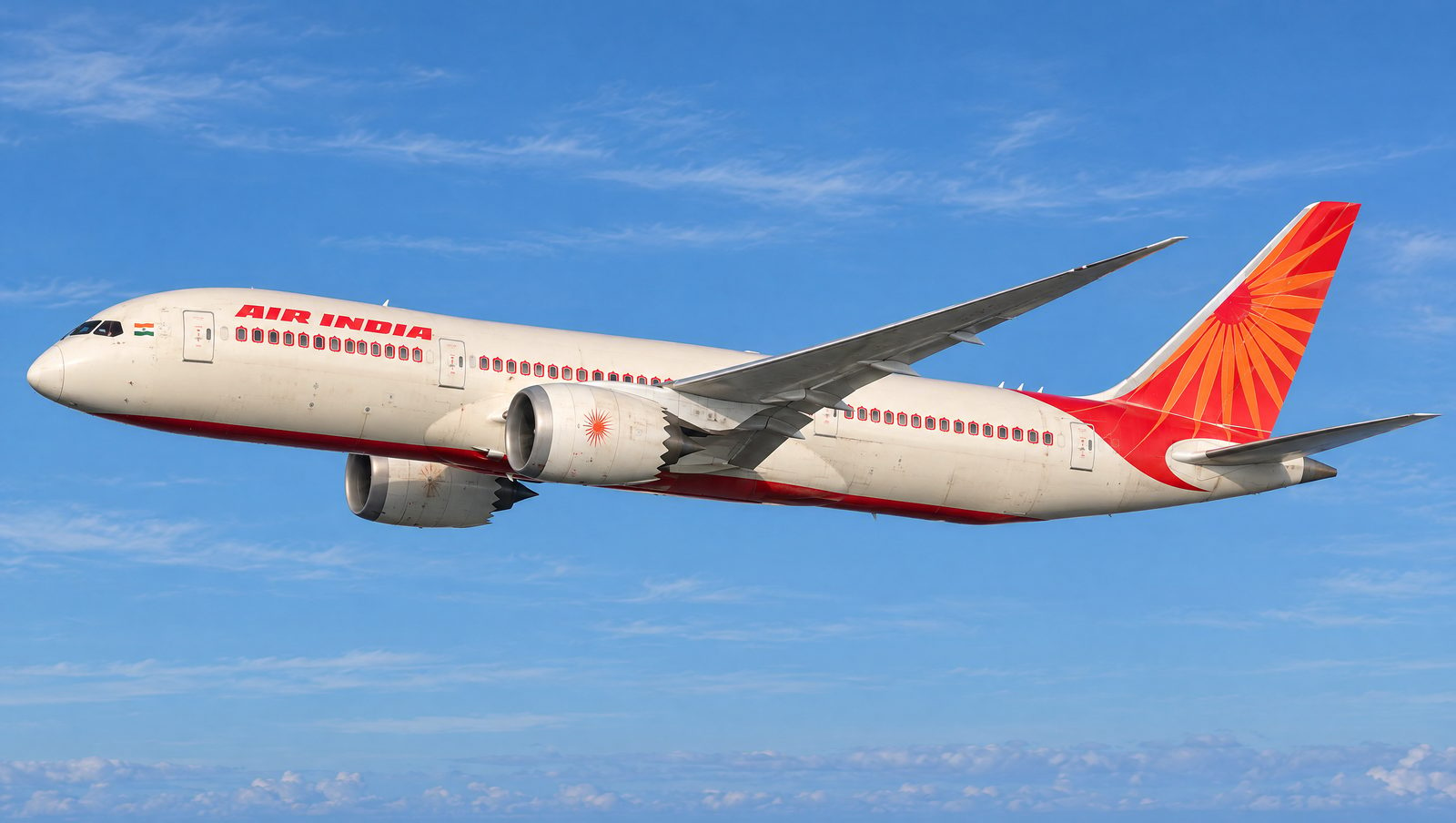
An Air India Boeing 787-9 operating flight AI2030 from Frankfurt to Delhi was diverted to Jaipur on Wednesday morning, 14 October 2026, after the aircraft transmitted the international hijack alert code Squawk 7500. Airport officials say all 306 passengers landed safely and that preliminary indications point to a possible mistaken activation of the alert. An investigation is under way and Air India had not issued a detailed public statement at the time of writing.
Diversion and landing at Jaipur
According to Charan Singh, the head of Jaipur International Airport, speaking to The Indian Express, the flight touched down at 9:35 a.m. local time. The aircraft was taxied to an isolation bay so that security teams could inspect the cabin, the cargo holds and passengers' luggage. Officials told local media that passengers were deboarded under the watch of security agencies and taken into the terminal, and that the situation was under control.
Gulf News and other outlets, citing the same airport briefing, said Central Industrial Security Force personnel, local police and bomb detection and disposal teams took part in the checks. The Independent reported that both pilots were also deboarded under security protocol and that India's National Security Guard had been placed on standby in Delhi. No injuries were reported.
What Squawk 7500 means
Squawk 7500 is the internationally recognised transponder code for unlawful interference, including a suspected hijacking. Initial reporting said Ahmedabad Air Traffic Control received a brief 7500 signal from the aircraft as it entered Indian airspace on the Frankfurt–Delhi routing, after which the flight was directed to divert to Jaipur rather than continue to its planned destination.
Early local reports differed over whether the scare involved a bomb threat or a hijack alert. An airport official later told the Hindustan Times, as relayed by The Independent, that the matter concerned a suspected hijacking rumour rather than a bomb threat. No authority has confirmed that an actual hijacking attempt took place.
Pilot error under preliminary review
Singh told The Indian Express that preliminary indications suggest the pilot may have issued the call by mistake, while stressing that investigators still need to establish the facts. That cautious framing matches Gulf News's later write-up of the same briefing. Passengers were to be moved on to their destinations under standard operating procedures once security clearances were complete.
The episode comes a day after a Corendon Airlines Boeing 737-800 from Corfu to Nuremberg also transmitted Squawk 7500 over Europe, prompting fighter escorts and a brief closure of Nuremberg Airport. German police and the airline later attributed that alert to a radio-system malfunction; there is no established link between the two events.
What travellers should know
AI2030 is a long-haul Air India service between Frankfurt and Delhi, typically flown with a Boeing 787-9 Dreamliner. Until Air India and Indian civil-aviation or security authorities publish formal findings, passengers booked on Air India long-haul flights should rely on the airline's own channels for schedule and disruption notices. This is a developing story and will be updated as official statements are released.
Sources: The Indian Express, The Independent, Gulf News, Hindustan Times (via Independent).





Comments
Loading comments…