


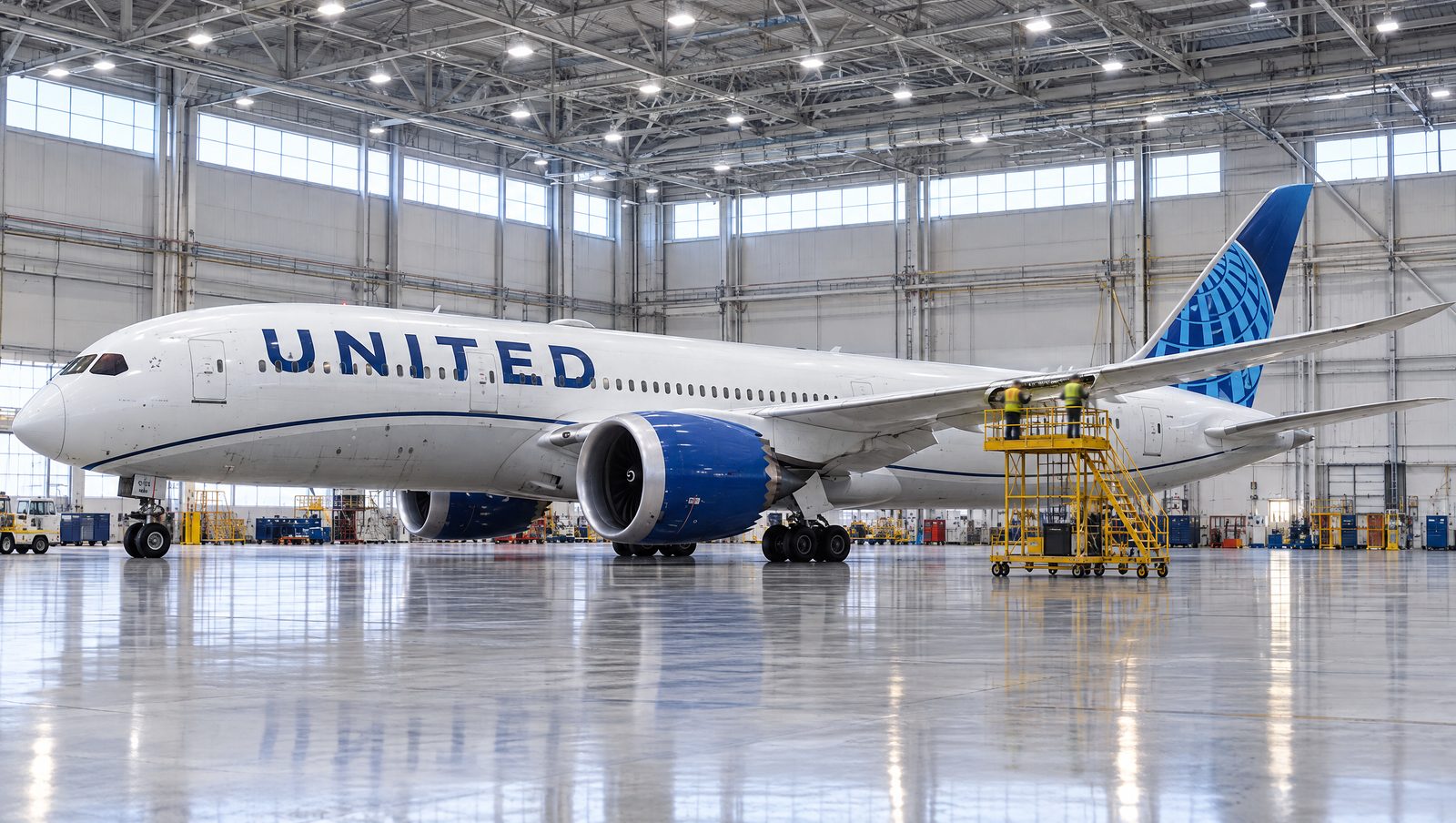
The U.S. Federal Aviation Administration has ordered operators of certain Boeing 787 Dreamliners to replace two leading-edge slat actuators with a new locking design, closing out a safety issue that has been managed with repetitive checks since 2019. The airworthiness directive, AD 2026-20-10, was published on October 8 and takes effect on November 12, 2026. The FAA estimates that 174 U.S.-registered aircraft are affected.
What the FAA found
Slats are movable panels along the front of the wing that extend at low speed to help the aircraft keep generating lift during takeoff and landing. According to the directive, as reported by Air Journal, the concern is that the outboard slats on affected 787s could end up in a position different from the one commanded without any alert appearing on the flight deck. The FAA warns that such a condition could leave the aircraft with insufficient lift for continued safe flight and landing.
The issue dates back to 2019, when the FAA reported five failures of outboard slat actuators during taxi. In those cases the slats did not match the commanded position, but the crews received a cockpit alert. A later review of the 787's high-lift system identified the more serious possibility that a slat could be mispositioned without the crew being told.
From checks to a hardware fix
The 2019 directive, AD 2019-20-07, was an interim measure. It required repetitive operational checks of the slats, corrective action depending on the results, changes to the flight manual and maintenance documentation, a limitation on retracting the flaps after landing in icing conditions, and a maintenance procedure to make sure ice, snow or slush was not blocking the moving surfaces.
The new directive supersedes the 2019 order and makes Boeing's permanent fix mandatory. Operators must replace the existing geared rotary actuators, known as GRAs, at outboard slat positions 2 and 11 with leading edge outboard lockout actuators, or LEOLAs, which include a locking function. The work follows Boeing Alert Requirements Bulletin B787-81205-SB270055-00 RB, Issue 2, dated November 25, 2024, and the FAA also credits work already done under Issue 1 of the bulletin from December 12, 2023.
The directive covers the 787-8, 787-9 and 787-10, but only the aircraft listed in the Boeing bulletin. It does not require every actuator in the 787's high-lift system to be changed. The November 12 date is when the rule takes effect, not a single deadline for all replacements; compliance times are set out in the bulletin, with adjustments specified by the FAA.
Until an aircraft is modified, the 2019 requirements still apply. Once an aircraft has the new actuators, the repetitive checks, the flight manual limitation and the related maintenance procedure are no longer required for that airframe. Operators must also add a new certification maintenance requirement to their programs: a functional check of the torque brake on each half of the slat drive unit.
The cost
The FAA puts the cost of the replacement at $32,375 per aircraft, made up of $31,610 in parts and nine work hours at $85 an hour. Across the 174 U.S.-registered 787s in its estimate, that comes to $5,633,250. The agency separately estimates $680 per aircraft for each of the operational checks that remain in place until the fix is installed, $85 per aircraft for the flight manual change, and about $7,650 per operator to revise maintenance programs. According to Boeing information cited by the FAA, some or all of these costs may be covered under warranty.
During the public comment period, United Airlines and the Air Line Pilots Association, International supported the proposal without asking for changes. Boeing's comments focused on clarifying when the older requirements end and on the wording of the icing restriction, which the FAA confirmed applies after landing.
What it means
For 787 operators, the directive turns a seven-year-old interim regime of checks and restrictions into a one-time hardware change. Airlines will now plan the actuator swaps into scheduled maintenance as the 787 fleet continues to grow worldwide.
Sources: Air Journal, U.S. Federal Aviation Administration.






Comments
Loading comments…