


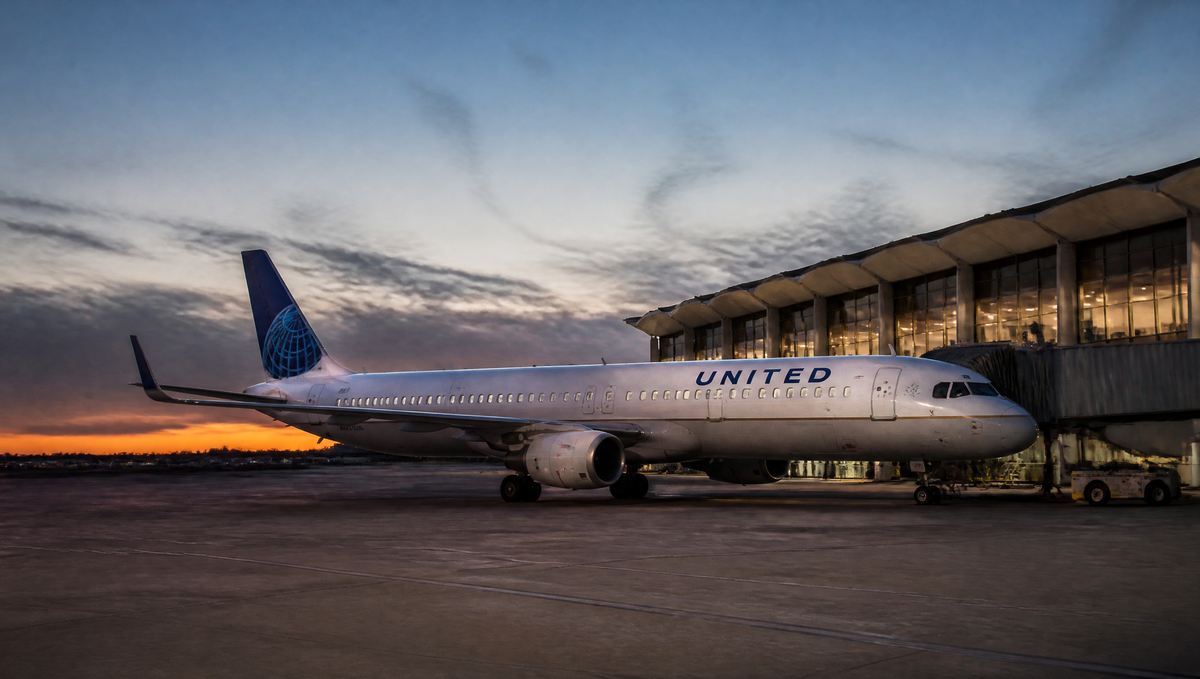
United Airlines will introduce its Airbus A321XLR on domestic flying before sending it across the Atlantic. According to Simple Flying, citing Ishrion Aviation, the extra-long-range narrowbody will initially operate from Washington Dulles International Airport to San Diego and Los Angeles, with both assignments currently scheduled short-term through 30 November. From that point the aircraft is set to begin international operations.
The choice is a familiar one in the industry, if slightly unusual for an aircraft bought explicitly for thin long-haul markets. New types arrive with new systems, new cabin hardware and new maintenance procedures, and airlines generally prefer to work through the early snags on routes where a recovery aircraft, a spare crew and a maintenance base are all within reach. Transcontinental flying out of Dulles gives United long sectors that genuinely exercise the airframe while keeping the operation inside its own network.
Washington Dulles is a logical place to start. It is one of United’s primary international gateways, and putting the aircraft there ahead of its transatlantic debut means crews, ground staff and engineering teams at the airport that will handle the type in long-haul service get to work with it first on shorter, more forgiving rotations.
The A321XLR itself is the longest-range member of the A320neo family, designed to let carriers open or maintain long, thin routes that cannot support a widebody. For a network airline, that means the ability to serve a secondary European city year-round with a single-aisle aircraft rather than either flying a widebody at a loss or not flying at all. It also gives planners a tool for markets that are strong in one season and weak in the next.
Domestic transcontinental flying is, in practice, a genuine test rather than a soft warm-up. Dulles to Los Angeles and Dulles to San Diego are among the longer sectors in the US domestic system, with real block times, real westbound headwinds and cabins full of passengers who will notice how the seats, lighting and inflight systems perform over five or six hours. Any cabin issues surface quickly under that kind of use.
For passengers, the practical upshot is that a small number of domestic flights this autumn will be operated by an aircraft whose interior was specified for long-haul work. Aircraft assignments on short-term schedules like this can and do change, so anyone hoping to book the type deliberately should check the equipment shown at the time of booking and again closer to departure.
The wider significance is what happens after 30 November. United has been building toward A321XLR international flying, and the domestic period reads as the final rehearsal before the aircraft starts doing the job it was ordered for. How smoothly these first weeks go will shape how quickly the type moves into the transatlantic schedule — and how confidently the airline leans on single-aisle aircraft to open markets that a widebody could never justify.
Sources: Simple Flying. Featured image: AI-generated by AviationShop. By Marco Bianchi.






Comments
Loading comments…